
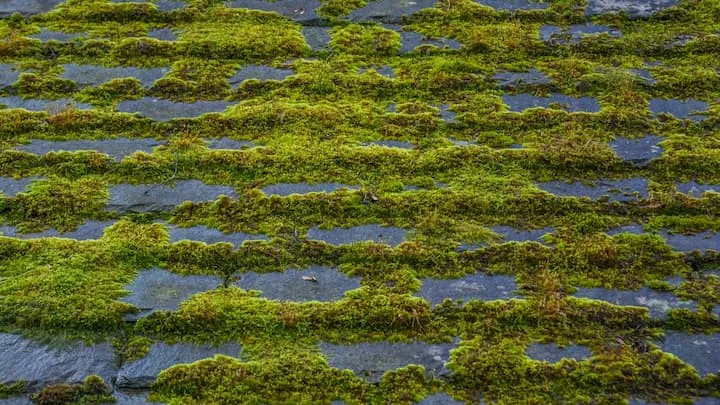
If you own a property in or around Bath with a natural stone roof, moss is probably a familiar sight. The damp, mild winters we get in this part of the south west are ideal conditions for it — and stone, being porous and textured, gives moss exactly the foothold it’s looking for.
Most of the advice you’ll find online is written with concrete tiles or slate in mind. Stone is different, and treating it the same way can cause real damage. So here’s what I’ve found actually works — and what to avoid.
Why Stone Roofs in Bath Are Particularly Prone to Moss
The stone tiles you see on older Bath properties — the layered, fissile limestone sometimes called Cotswold stone slate — are naturally porous. They absorb moisture readily, and once damp, they stay damp longer than modern materials. Add to that the shade cast by Bath’s valley topography and surrounding trees, and you’ve got near-perfect moss-growing conditions for much of the year.
This doesn’t mean moss is inevitable or unmanageable. It just means the approach needs to suit the material.
What Makes Moss Worse on Stone Roofs
Before getting to solutions, it’s worth knowing what accelerates the problem — because some well-intentioned attempts to deal with moss actually backfire.
Pressure washing is the big one. It feels satisfying and looks effective immediately, but on natural stone it strips away the surface, opens up the pores further, and can dislodge the mortar bedding on older roofs. You’ll often end up with more moss returning faster, and potentially a repair bill on top.
Moss scrapers used too aggressively cause similar issues. Dry scraping is preferable to wet scraping, and even then, any mechanical removal on aged stone needs a light touch.
Doing nothing after treatment is also a mistake. Biocidal treatments kill moss, but the dead material still needs to clear — and if it’s left to break down in place, it holds moisture against the stone and feeds the next round of growth.
What Actually Works
The most reliable approach on stone roofs is a soft wash biocidal treatment — a low-pressure application of a suitable moss and algae killer. This kills the growth without the physical damage that pressure washing causes. Over the following weeks, rain does most of the clearing work naturally.
After that, a moss inhibitor — typically a zinc or copper-based product — applied along the ridge can slow regrowth significantly. These work by releasing trace amounts of metal ions when it rains, which run down the roof and make life difficult for moss spores trying to take hold.
Keeping gutters and valleys clear matters more than people realise. Blocked gutters cause water to back up and sit against the lower courses of stone, keeping them permanently damp — which is exactly where moss tends to be worst. Clearing them twice a year, particularly after autumn, makes a real difference.
Finally, if there are overhanging branches casting shade over the roof, cutting them back improves airflow and drying time. It won’t eliminate moss entirely, but it shifts the conditions in your favour.
When to Call a Roofer
Moss itself isn’t always a structural problem, but it can mask one. If you’re seeing moss concentrated heavily in one area, it’s worth having someone take a look — it can indicate a low spot where water is pooling, a failing bed of mortar, or a cracked stone that’s retaining moisture.
Stone roofs on older Bath properties are also sometimes at the age where individual tiles are beginning to fail regardless of moss. A roofer who knows natural stone can tell you quickly whether you’re dealing with a surface maintenance issue or something that needs attention underneath.
If you’ve got a stone roof in Bath or the surrounding area and you’re not sure what you’re looking at, I’m happy to come and take a look. LH Roofing covers Bath and the wider Wiltshire area — estimates and advice are always free.